

 Reynaldo Mena
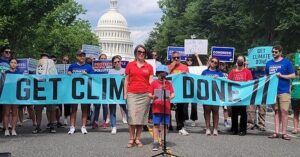
The Supreme Court’s 6-3 decision last week curtailing the U.S. Environmental Protection Agency’s ability to regulate power plant pollution left untouched one of the strongest tools to reduce greenhouse gas pollution under the Clean Air Act — a nationwide greenhouse gas pollution cap.
“The Supreme Court ruling forecloses some action under one Clean Air Act program but leaves the door wide open for Biden to make big cuts to fossil fuel emissions and steer the country away from climate chaos,” said Maya Golden-Krasner, deputy director of the Center’s Climate Law Institute. “A nationwide climate pollution cap is the heart of the Clean Air Act, and it could achieve significant pollution reductions. We can’t afford any more half-measures and delays.”
In 2009 the Center and 350.org petitioned the EPA to use its full powers under the Clean Air Act to list greenhouse gas pollution as a criteria pollutant and set a nationwide emissions cap in the form of a “national ambient air quality standard,” or NAAQS. Under the Act, EPA must set the science-based standard at the level that’s necessary to protect human health and welfare and the environment.
Last year the EPA reopened consideration of the petition after it withdrew the Trump administration’s denial of it, noting that “the agency did not fully and fairly assess the issues raised by the petition.” The Center urged the EPA to move ahead with the cap because the urgency of the climate crisis and evidence that the dangers of global heating to human health and survival have only grown since the 2009 petition.









Clínica Romero, Sen. Menjivar Advance SB 1179 to Expand Care Access in Underserved Communities
California Lawmakers Push Medi-Cal Access Restoration to Counter Coverage Freeze
IMMIGRATION
About 25 a Day: How ICE from the Los Angeles Region Added Up
POLITICS
From “Back to Basics” to “Dream with Me”: Does Los Angeles Need a Clearer Message?
Sara Hernández Led the Primary. Now Comes the Final Push: Making Sure Her Community Counts
Voted for Bass in 2022. Back Raman in 2026: A Generational Revolt Among Young Latinos
Meet Thrissur, the Kerala City That Saw Nithya Raman’s Story Begin